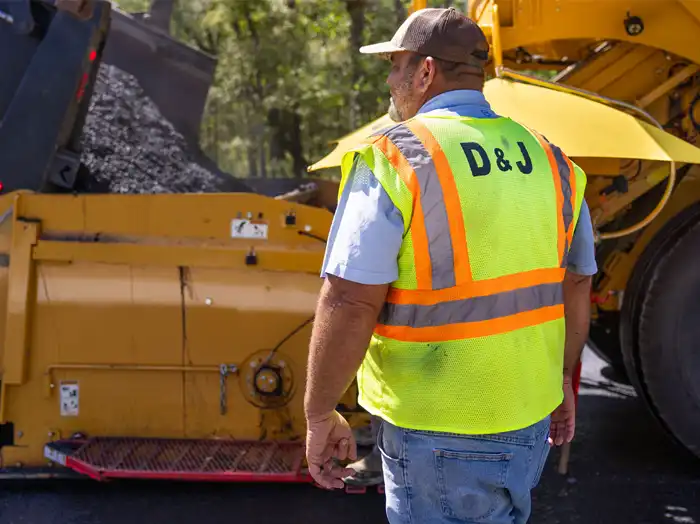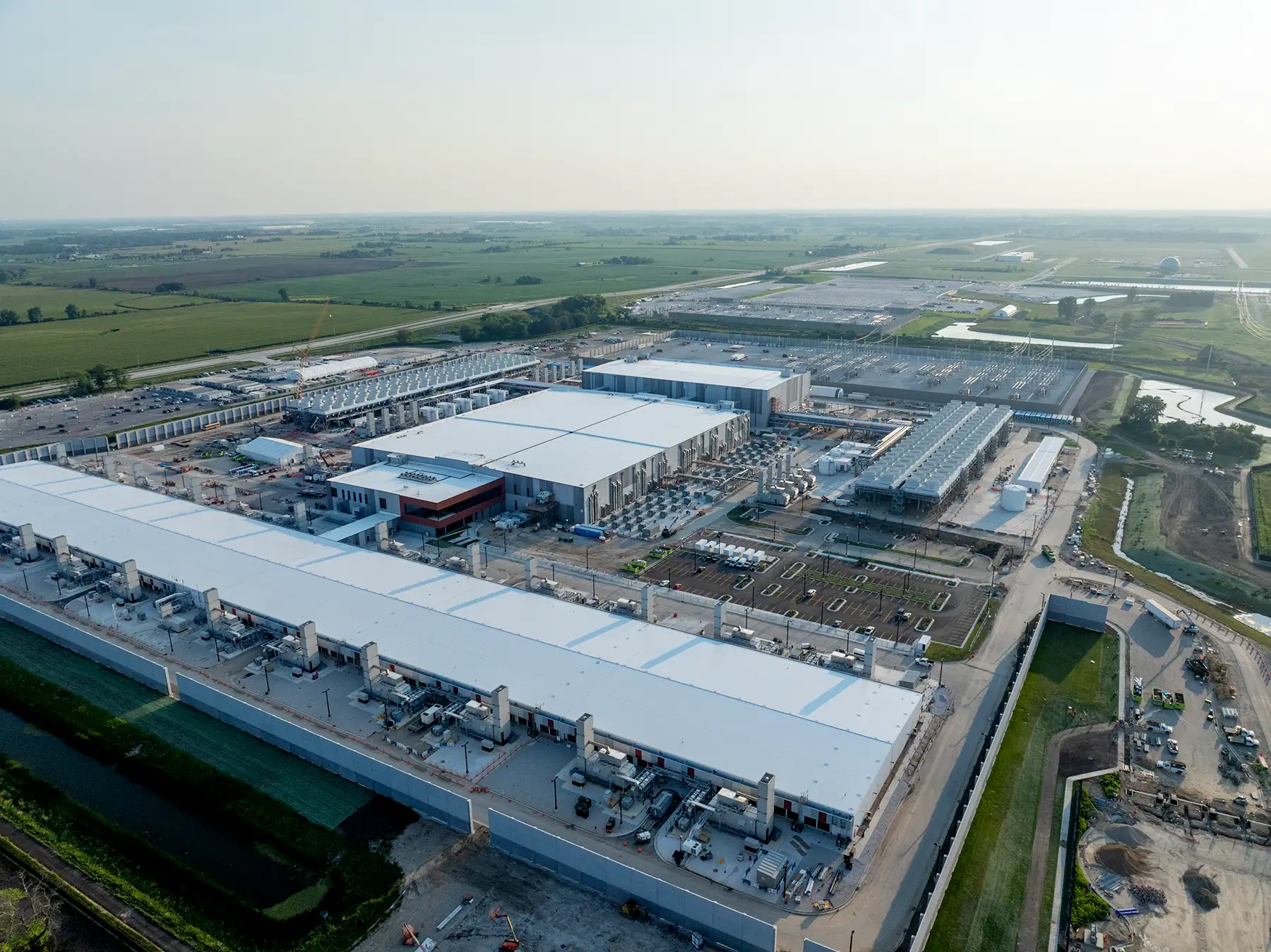
The work that builds a campus this size is heavy civil and skilled trades: earthwork, concrete, paving, hauling, and the people who run all of it. If you've read about the project and wondered whether there's a place in it for someone who works with their hands, the answer is that the project is mostly hands.
The short version. A hyperscale data center is, for years, a construction site. The jobs it creates in the largest numbers are skilled trades, equipment operators, CDL drivers, concrete and paving crews, batch-plant operators, and the supervisors who lead them, and most of that work is with regional contractors rather than the technology company itself. The boom is real, and it's a construction boom.
It's worth being plain about this, because the headlines aren't. A data center is built to house computing, but the building of it is conventional heavy construction at an unconventional scale. For every engineer the finished campus will employ, the construction phase needs many more operators, drivers, and tradespeople to move the earth, pour the concrete, and lay the asphalt.
That matters for anyone in northeast Louisiana weighing whether this wave has anything to offer them. The technology side of a data center is a narrow band of highly specialized jobs. The construction side is broad, it's local, and it runs for years. The opportunity in front of the region isn't really about artificial intelligence at all. It's about roads, pads, and paving, the work this part of the state has always done, suddenly needed in far greater volume.
The roles actually in demand
When a project of this size lands, demand rises across a whole set of trades, and not only at the site itself. The work that feeds a megasite pulls on operators, drivers, and crews from across the region.
A few of the roles that a build like this puts in demand:
Heavy equipment operators, running dozers, excavators, graders, and rollers to move and shape the site.
CDL drivers, hauling aggregate, concrete, asphalt, and equipment in a near-constant cycle.
Concrete crews and finishers, placing and finishing the slabs and foundations the campus stands on.
Paving crews, laying the miles of road, lanes, and lots a site this size requires.
Batch-plant operators, producing the ready-mix concrete that has to arrive on time, in volume, every day.
Pavement-marking technicians, striping the roads and lots once the paving is down.
Superintendents and estimators, the people who sequence the work and price it.
Terminal and logistics staff, moving materials by truck, rail, and barge to keep the site supplied.
Most of these don't require a degree. Several can be entered with little experience and learned on the job, and the ones that need a credential, an operator's ticket or a CDL, can be earned through short programs and apprenticeships, several of which now exist in the region precisely because the demand showed up.
Here's the part the job boards blur. Search for data center jobs near Rayville and you'll mostly find the technology company's own postings: facilities managers, mechanical specialists, quality control. Those are real jobs, but they're the operational side, and they're a fraction of the people on site during the build.
The construction itself is done by contractors. The roads, the site work, the concrete, and the paving are built by firms that specialize in heavy civil, and their crews are who you join if you want to build the project rather than maintain it once it's done. For most people drawn to this work, that distinction is the whole game: you don't apply to the technology company to operate a grader, you apply to the contractor moving the dirt.
A single project ends. The skill and the employer don't have to.
A trade learned on a build like this transfers directly to the next one, because earthwork, concrete, and paving are needed everywhere, on highways, industrial sites, and commercial work, not just at data centers. The difference between a temporary job and a durable career comes down to who you work for. A contractor with a steady backlog across public and private work can keep a good operator busy for decades, through this boom and past it. That's why the most valuable thing the data center wave offers the region isn't the campus. It's the reason for a generation of workers to learn a trade that will keep paying long after the build is done.
This is the work the Trinity portfolio hires for: heavy civil, concrete and ready-mix, paving and marking, and intermodal logistics, across five companies and two states. The data center near Rayville is one project among many on the books. The careers are built to outlast it.